
When people ask what we do, the easy answer is...
"We're beekeepers."
But the truth is, our job starts long before the bees ever make honey.
It starts with the land.
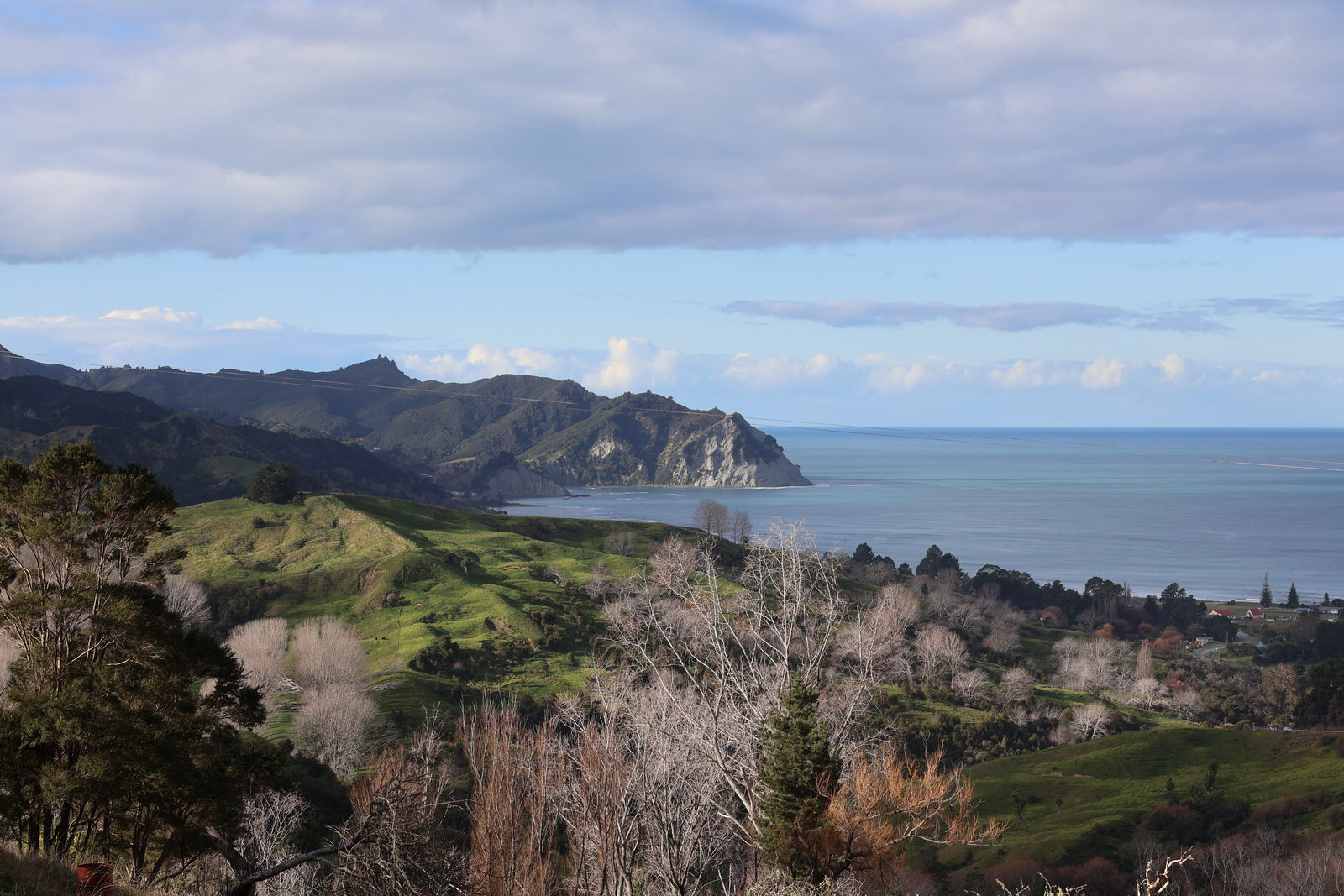
Every season we spend countless hours walking the hills around Tokomaru Bay. We know where the Mānuka blooms first, which gullies stay damp through summer, and which ridges wear the full force of the East Coast wind.
The better we understand the landscape, the better we can care for it.
Because healthy bees don't exist without healthy ecosystems.
That's why we're planting thousands of native trees across our land on New Zealand's East Coast.
Not because we have to.
Because we believe it's the right thing to do.
Looking Beyond the Next Harvest
Planting native trees isn't about next season's honey crop.
Some of these trees won't reach their full potential for decades.
We may never see them at their biggest.
But our kids will.
Maybe even our grandkids.
That's the thing about planting trees.
You do the hard work today, knowing someone else will enjoy the benefits tomorrow.
We're okay with that.
What We're Planting
We're not planting just one species, we're rebuilding a native ecosystem.
Our planting programme includes Mānuka and Kānuka to provide valuable forage for bees, Harakeke (New Zealand flax) to attract tūī and bellbirds, and Pūriri, Five Finger and Kōwhai to create food and shelter for native wildlife.
We're also planting species like Karamū, Māhoe, Tī Kōuka (cabbage tree), Tōtara and Kahikatea, along with native sedges around waterways to help reduce erosion and improve water quality.
Every tree has a purpose.
Some provide nectar.
Some stabilise steep hillsides.
Some shelter young forests.
Others will stand here long after we're gone.
Together they'll help create a healthier, more resilient landscape for bees, birds and future generations.
Why Native Trees Matter
Every tree we plant adds another piece back into the puzzle.
Native planting helps to:
- Create habitat for bees, birds and beneficial insects.
- Stabilise steep East Coast hillsides.
- Reduce erosion after heavy rain.
- Improve soil health.
- Protect waterways.
- Increase biodiversity across the farm.
For us, honey has always been part of something much bigger than what ends up in a jar.
Creating Better Habitat for Bees
People often assume bees only need flowers.
In reality, they need healthy landscapes.
A diverse environment provides nectar, pollen, shelter and clean water throughout the seasons.
The healthier the ecosystem, the healthier the bees.
And healthier bees produce remarkable honey.
Tokomaru Bay Is Worth Looking After
We're incredibly lucky to call Tokomaru Bay home.
It's rugged.
Remote.
Wild.
It's also one of the most beautiful corners of New Zealand.
The same hills that produce our East Coast honey deserve to be looked after for the generations that come after us.
That's something we think about every time we put another tree in the ground.
Every Tree Tells a Bigger Story
We don't see tree planting as a side project.
It's part of being a beekeeper.
It's part of being a farmer.
It's part of being a parent.
And it's part of building a business we're proud to hand on one day.
Every tree represents a small investment in the future.
Not just for our family.
For the bees.
For the birds.
For the land.
And for everyone who enjoys a spoonful of East Coast honey.
Follow the Journey
This isn't a one-off planting day.
It's an ongoing commitment, and we'll be sharing the journey as the landscape grows.
We'll introduce you to the native species we're planting, the people helping us, the wildlife returning, and the lessons we're learning along the way.
Because we believe the story behind the honey is just as important as the honey itself.
After all, remarkable honey doesn't just come from healthy hives.
It starts with healthy land.